Spend Less Time Searching and More Time Finding the Right Job
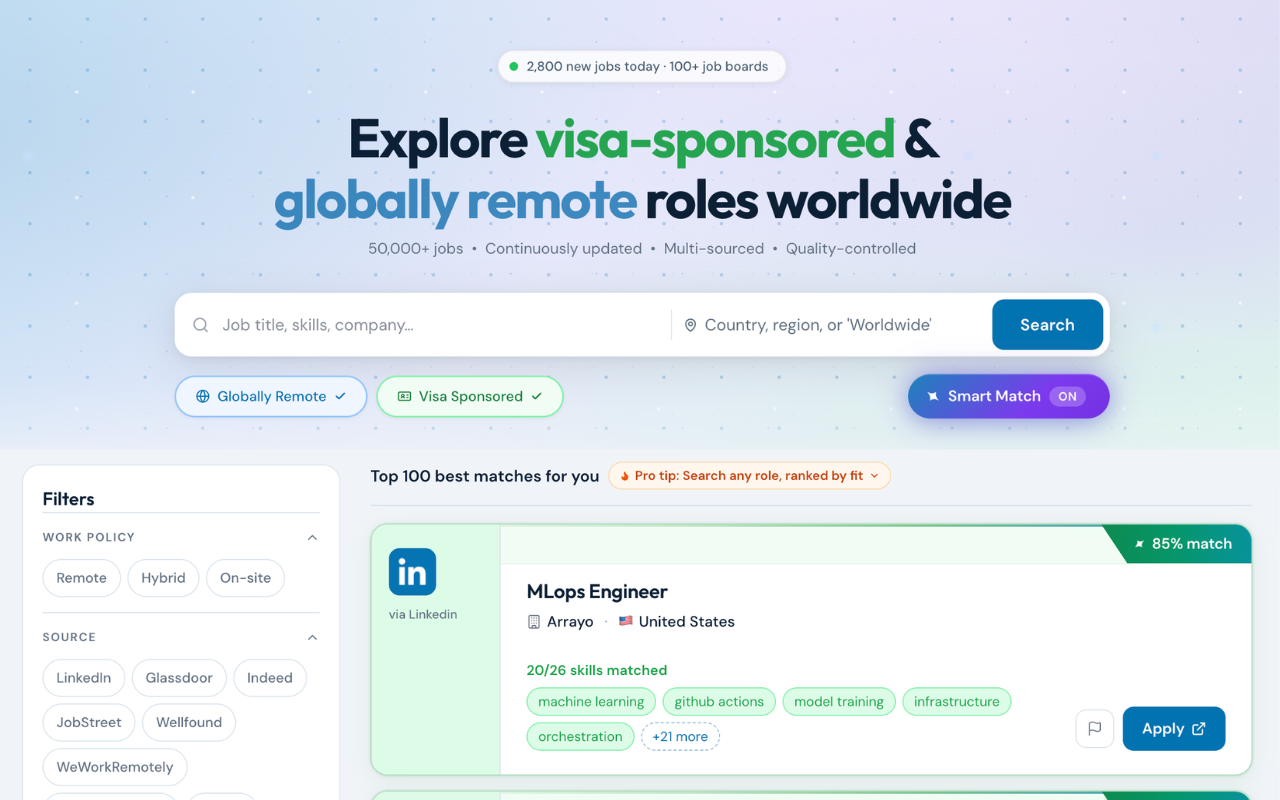
The hardest part of job hunting is not always finding vacancies. It is deciding which ones deserve your time. A single search often returns hundreds of vacancies, but many are unsuitable due to location restrictions, limited work eligibility, unclear requirements, or a weak fit with a candidate's experience. An AI Job Search offers a different starting point by comparing opportunities with the person behind the resume, rather than relying only on job titles and keywords.
That difference matters because a large number of results can create the illusion of progress. Opening twenty tabs may feel productive, but it does not help when most roles require skills, seniority, or work authorization the applicant does not have. A smarter approach begins with relevance. By using a Personalized Job Search, candidates can narrow the field before spending time rewriting a resume, researching a company, or preparing a cover letter.
Having More Job Listings Does Not Always Create More Opportunities
Traditional job boards remain useful for exploring industries, discovering employers, and seeing what roles Personalized Job Search are available. The challenge appears when search results include a mixture of relevant roles, unsuitable positions, expired listings, and opportunities limited to specific countries. This is especially frustrating for people looking for Global Jobs, because “remote” may still mean remote only within the United States, Europe, or another defined region.
A similar challenge exists for professionals looking for International Jobs. A role may look perfect at first glance, but the employer may not sponsor visas or accept applicants outside its home country. Those details are often buried near the bottom of the description. Finding these details after carefully reviewing each vacancy wastes valuable time, especially when the same experience happens repeatedly throughout the job search.
Resume Matching Helps Prioritize the Right Roles
An AI Job Matcher improves job searching by measuring how well a candidate's background matches the requirements of each position. It does not remove the need for judgment, and a high match score cannot guarantee an interview. What it can do is help applicants decide where to look first. Focusing on likely matches instead of reviewing every vacancy makes the job search more efficient and less overwhelming.
This is where Resume Match Jobs offer greater value than broad job recommendations. A role may use a different title from the one the candidate searched for while still requiring similar skills. By analyzing resume content instead of relying only on keyword searches, these systems can uncover relevant opportunities that applicants might otherwise overlook.
A Better Job Search Focuses on Quality
Submitting identical applications to many unrelated companies often increases activity without creating meaningful progress. Strong applications require attention. Job seekers must tailor their resumes, highlight suitable experience, and understand what each employer is genuinely looking for. That becomes easier when the initial list contains fewer distractions.
The most practical strategy is not to abandon traditional job boards completely. Traditional platforms can help candidates explore the market, while intelligent matching can identify which positions deserve a closer look. Better job searching is not about applying everywhere. It is about recognizing where your experience, goals, and eligibility create a realistic reason to apply.